
Quick Answer
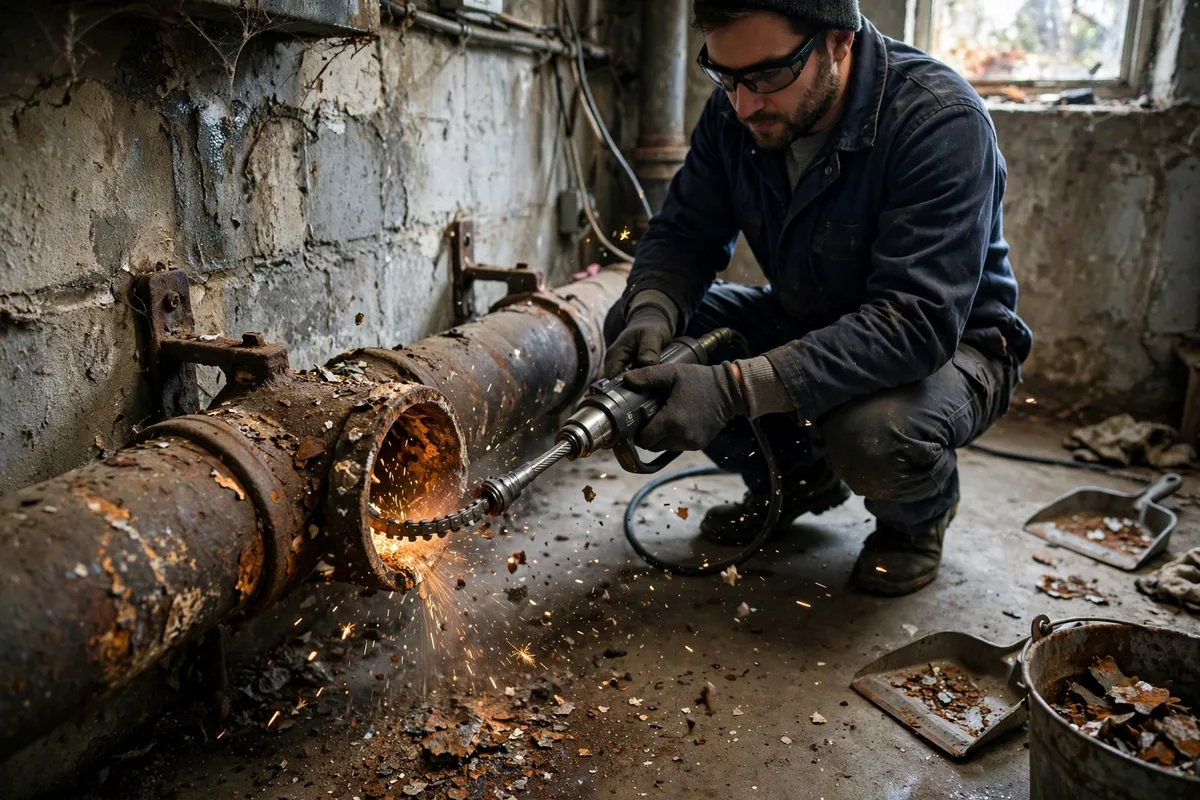
Open a fifty-year-old cast iron drain and the pipe inside is barely a pipe: decades of corrosion build a crust — scale — that narrows the bore, roughens the wall, and snags every solid that passes. The full walk-through follows below.
Cast Iron Pipe Descaling, Explained From Inside The Pipe
Open a fifty-year-old cast iron drain and the pipe inside is barely a pipe: decades of corrosion build a crust — scale — that narrows the bore, roughens the wall, and snags every solid that passes. The line has not been blocked by anything. It has become smaller.
Chain descaling is how pros hand the pipe its width back: a rotating chain tool that knocks the crust off the wall so a jetter can flush it out. This guide covers when descaling is the answer, when the iron is too far gone, and why the camera decides.
The Pipes And Parts Behind It
Start underground, where every version of this story lives. The sewer lateral runs from the house to the municipal sewer in the street; the main sewer line is the same pipe seen from inside the house. Along the way sit the parts: the cleanout for access, a P-trap sealing every fixture, the vent stack breathing through the roof, the floor drain waiting at the lowest point, and a grease trap where a commercial kitchen joins the fight.
The materials decide the failure mode. Cast iron pipe scales from within; vitrified clay pipe holds its shape while its joints open; PVC pipe resists corrosion and hates heat; Orangeburg pipe, in post-war streets, simply ages out. A bellied pipe ponds water in any of them, mineral scale roughens the iron, and pipe corrosion finishes what scale starts. At the property’s edge the choice is the street’s municipal sewer and storm drain — or a septic tank doing the same job privately.
The Tools A Pro Brings, And Why
Two machines do most of the work, and they are not interchangeable. The motorized drain snake (auger) bores and cuts — with a root cutter head it mulches tree root intrusion at the joint. Hydro jetting washes: it is the only honest answer to grease buildup (FOG) lining a wall.
Around them: the CCTV sewer camera for evidence, chain descaling for iron that has narrowed itself, sonde line locating for finding the line under lawn or slab. The diagnosis sorts the rest — a frozen drain line needs patience, a sewer surcharge needs the street to fall, and expansive clay soil needs a repair conversation, not a cleaning one.
What Your Pipes Are Made Of Changes Everything
Materials explain symptoms. Tree root intrusion needs a joint or a crack to enter — clay provides joints by design. Grease buildup (FOG) grips rough walls, which is why scaled iron clogs faster than smooth PVC. A frozen drain line threatens shallow, slow runs regardless of material.
The cleanout, the P-trap under the sink, the vent stack through the roof, the floor drain in the basement — each part also has its era and its failure mode. Knowing which generation of plumbing you own is the beginning of every smart drain decision.
The Tools, Honestly Compared
Pros choose tools by cause, not by habit. Roots get cutters; grease gets the jetter; a bellied pipe gets filmed and discussed, because no tool uncut a sag. Expansive clay soil moves lines in ways only excavation or lining answers — honesty about a tool's limit is part of the tool kit.
After the work, the same camera that diagnosed the line verifies it: flow at full width, joints on record, the next interval set by evidence. Any pro who will not film the result is asking to be trusted instead of checked.
Why The Camera Comes First
A sewer camera inspection turns an underground argument into footage. Roots at a joint, a crack, a belly holding water, scale like a cave wall — each cause is visible, measured from the cleanout, and recorded. Decisions made from footage age well; decisions made from guesses get revisited at emergency prices.
The camera also protects the pipe: jetting pressure is chosen for the line's actual condition, fragile sections get gentler methods, and nobody pays to clean the wrong line. On older homes it is not an extra. It is the diagnosis itself.
Older Pipes Deserve Older-Pipe Methods
Pre-1980 housing — 49.7% of US homes, by the Census — drains through materials with known ageing curves: cast iron pipe scaling from within, vitrified clay pipe joints opening to roots, Orangeburg pipe softening in the post-war suburbs. None of this is failure; it is biography.
The methods respect the material: camera first, pressure chosen for the wall that must withstand it, chain descaling where iron can take it, cutting where roots demand it. An old line treated knowingly can serve for decades more; treated generically, it can be killed by kindness.
When To Stop Reading And Call A Pro
When cast iron descaling stops being a reading topic, it becomes a call. The pattern this guide cannot see is the one inside your line — and seeing it is a pro's whole job: cleanout open, camera in, cause on a screen you can watch. The number on this page is free, answered 24/7, and a pro can typically arrive in 30–60 minutes when it is an emergency. And if the problem arrived with a flood or a declared disaster, FEMA guidance and assistance may apply to the damage side — one more reason the paperwork starts with the pro's record.
Drain Problem Getting Worse?
One free call connects you with a local pro who can check it in person.
Call (800) 555-0100Free Call · Answered 24/7 · Local Pros Near You
Drain Cleaning Help In These Cities
Reading only goes so far — the line itself needs eyes on it. These city pages are where Cast Iron Pipe Descaling becomes a visit: each carries its city's housing data, ZIP list and nearest served neighbours, plus the free number answered 24/7. Nearby state pages: Drain Cleaning Florida · Drain Cleaning Ohio.
Cast Iron Pipe Descaling — Frequently Asked Questions
A real person answers 24/7 and can connect you with a local pro.
(800) 555-0100Reviewed By Hamza
Master Plumber & Emergency Drain Clearing Specialist
Hamza is a certified master plumber and emergency drainage specialist with more than 15 years of hands-on experience clearing main lines, sewer laterals and storm-drain systems. He has handled midnight sewage backups, root-choked clay laterals and grease-dam emergencies across hundreds of callouts, and he reviews every guide on this site for technical accuracy before it is published.
Updated October 31, 2026
Dealing With Cast Iron Pipe Descaling Right Now?
One free call connects you with an independent local pro — answered 24/7, with arrival in 30–60 minutes in many cases.
Call (800) 555-0100Free Call · Answered 24/7 · Local Pros Near You
Related Guides
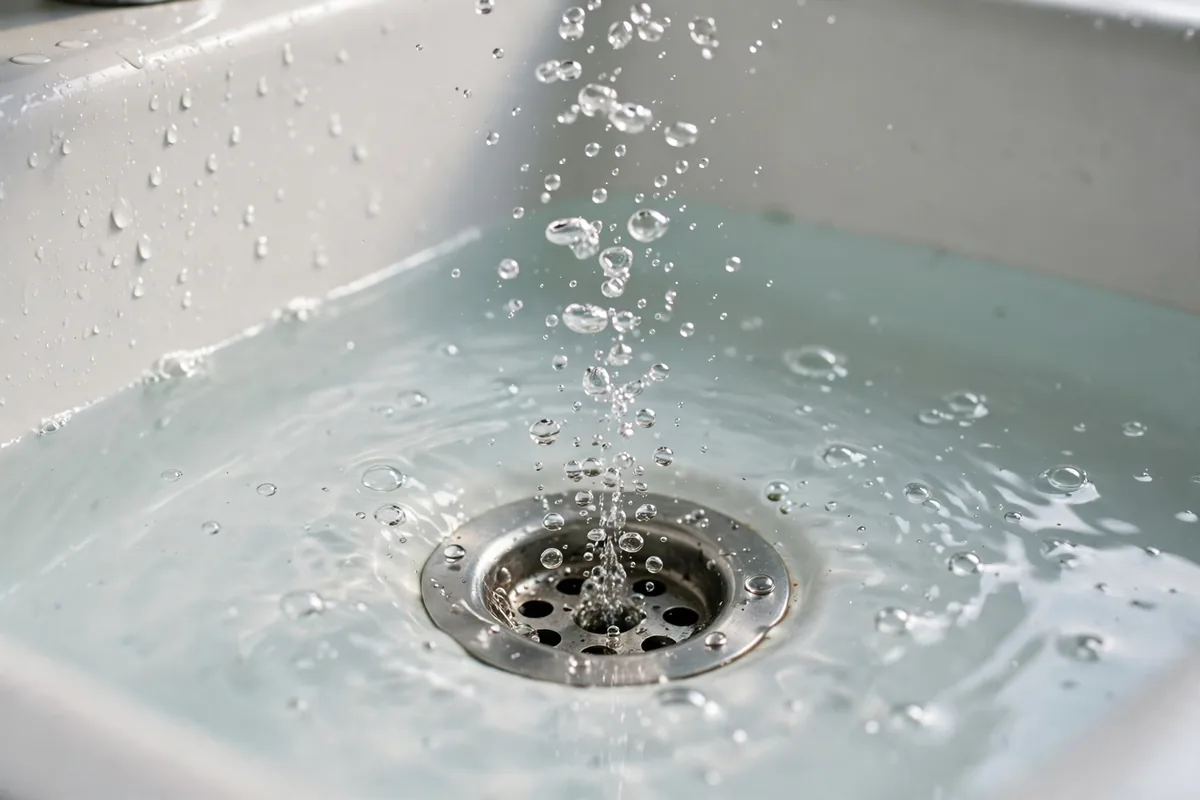
Why Do My Drains Gurgle?
Gurgling Drains — a homeowner guide.
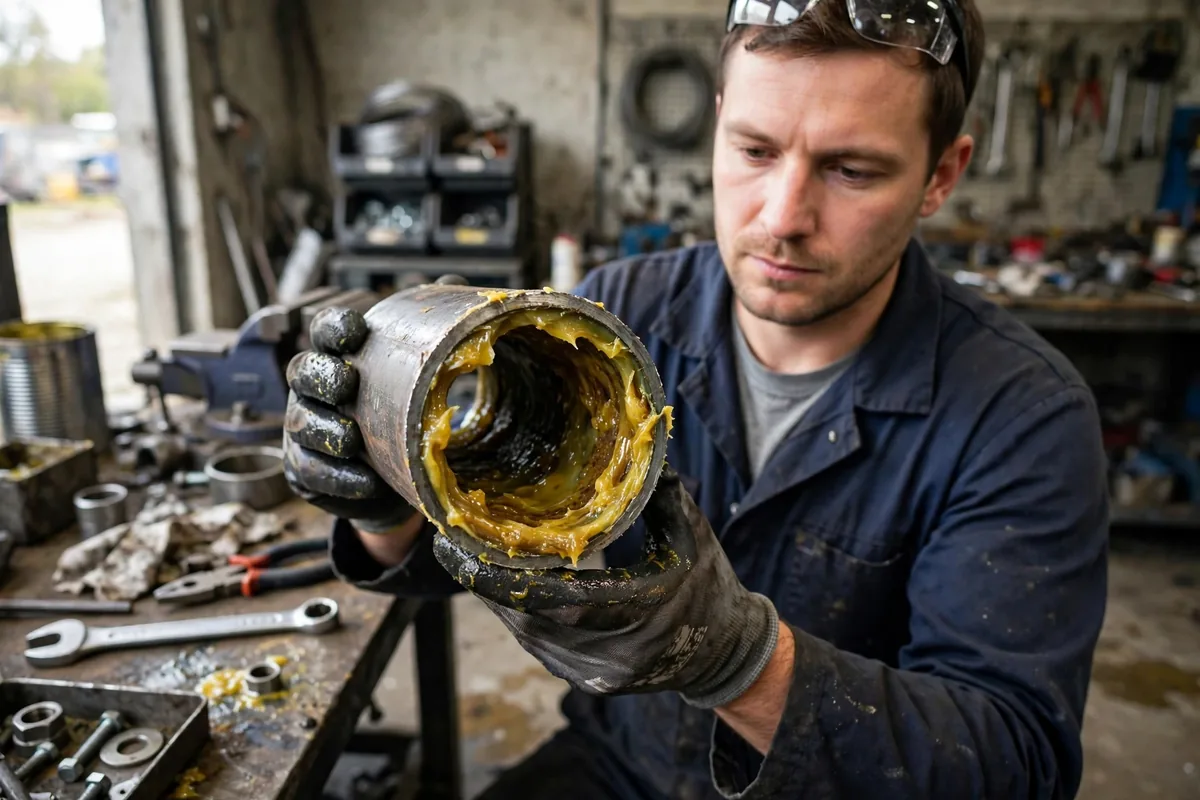
Grease In Drains: How FOG Builds A Blockage
FOG — fats, oils and grease — is the most preventable major clog and the most common one in kitchen lines. What to do about it is the rest of this guide.
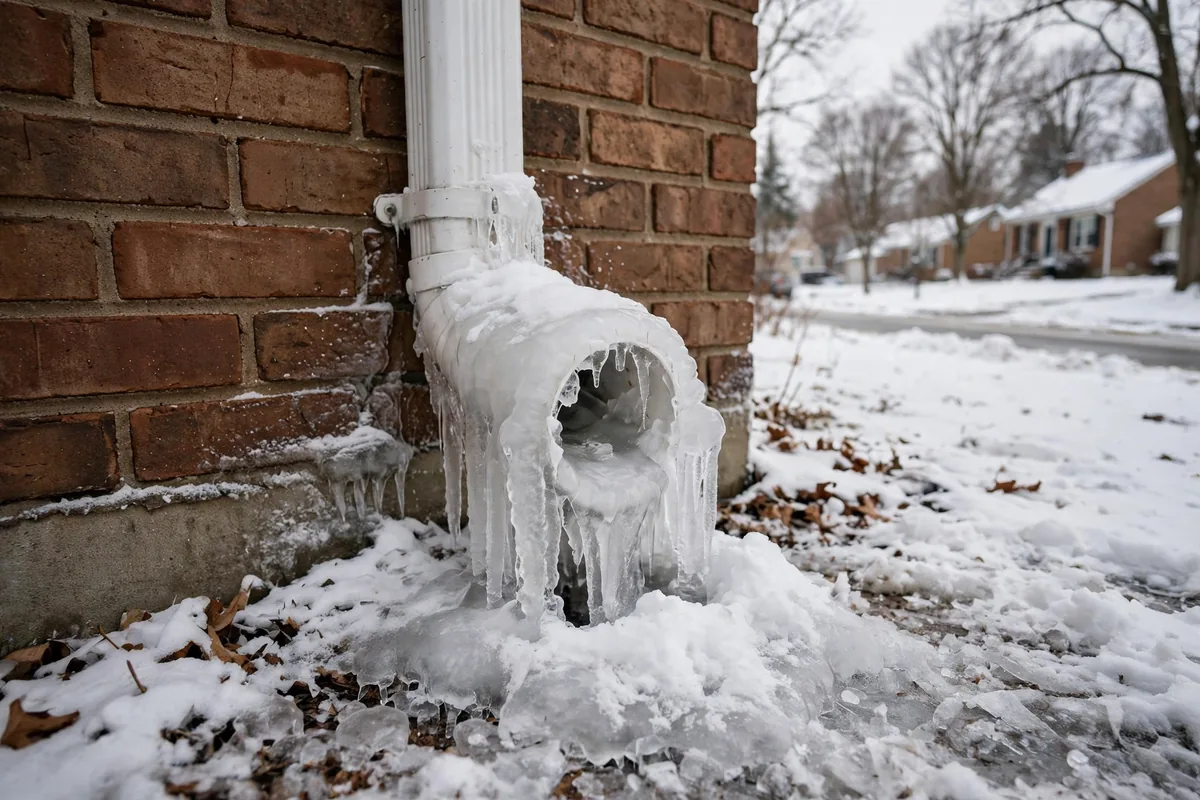
Frozen Drain Lines In Winter: Safe Steps
A drain line freezes differently from a supply line: it carries water intermittently, so the ice builds where flow slows — a shallow yard run, an unheated crawlspace, a belly that holds water between uses. The details, the tools and the honest limits follow.