
Quick Answer
It surprises people how many homeowners do not know whether their house drains to a municipal sewer or to their own septic tank. What to do about it is the rest of this guide.
Septic Tank Vs Sewer Line: Five Ways To Tell What You Have
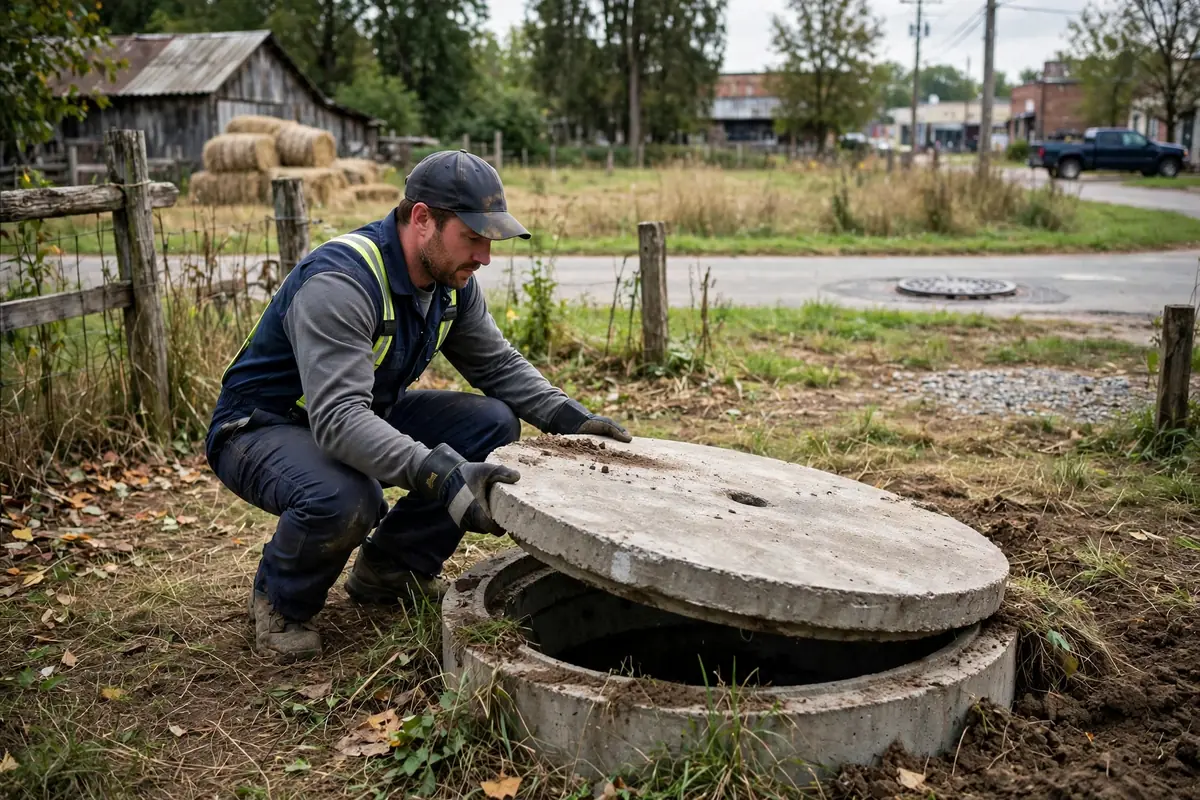
It surprises people how many homeowners do not know whether their house drains to a municipal sewer or to their own septic tank. The two systems share every fixture indoors and diverge completely underground — different failures, different maintenance, different bills.
This guide gives five reliable tells (the water bill, the yard, the cleanout, the records, the symptoms) and explains why the answer changes everything about a drain problem, starting with who is responsible for what.
The Pipes And Parts Behind It
Every drain system is three things: pipes, parts and a destination. The pipes are the sewer lateral outside and the main sewer line inside the property’s story; the parts are the cleanout, the P-trap under each fixture, the vent stack above, the floor drain below, and the grease trap on any commercial run.
Materials write the timeline. Cast iron pipe narrows with mineral scale and pipe corrosion; vitrified clay pipe stays round while its joints admit roots; PVC pipe is the low-maintenance youngster with a weakness for heat; Orangeburg pipe is the pensioner. A bellied pipe defeats them all equally. And the destination is either the municipal sewer and its storm drain sibling, or a septic tank in the yard.
The Tools A Pro Brings, And Why
Equipment is the visible half of judgement. A motorized drain snake (auger) for cutting, hydro jetting for scouring, a root cutter head for the tree work, chain descaling for the iron work — each tool exists because one material or blockage laughs at the others.
The CCTV sewer camera and its sonde line locating partner turn the invisible system into a map with measurements. That map is what separates the causes a machine can cure — grease buildup (FOG), roots, scale — from the ones it cannot: a frozen drain line mid-thaw, a sewer surcharge mid-storm, expansive clay soil mid-shift.
Septic Systems, For Completeness
A septic home replaces the municipal sewer with its own treatment: the line runs to a tank, solids settle, liquid leaves to a drain field. Its clogs and backups rhyme with sewer homes' but the geography is private — the "main line" is short, and the tank's pumping rhythm is the maintenance heartbeat.
The US EPA's septic guidance is the homeowner standard: pump on schedule, watch what goes down (the tank is a biology, not a bin), and treat a house-wide slowdown as a tank question as well as a line question.
Reading The Signs Like A Pro
Pros read drains the way doctors read charts: pattern over symptom. One fixture is local; several fixtures are the main sewer line. Symptoms that follow rain implicate the storm drain and surcharge; symptoms that follow the washing machine implicate capacity; symptoms that follow guests implicate a line with no margin left.
The lowest fixture is the narrator. A floor drain that burps, a ground-floor tub that fills from below, a toilet that bubbles when the washer runs — the system always confesses at its lowest opening first.
What Actually Sets The Cost
Two identical symptoms can be different invoices: a grease mat at twenty feet and a collapsed joint at sixty are both "the main line is clogged". The camera separates them before money does.
The way to control cost is to control information: know your cleanout location, keep the footage from every visit, and act on early symptoms while the job is still a cleaning. Emergency tempo is the most expensive line item that never appears on the invoice.
Why The Camera Comes First
A sewer camera inspection turns an underground argument into footage. Roots at a joint, a crack, a belly holding water, scale like a cave wall — each cause is visible, measured from the cleanout, and recorded. Decisions made from footage age well; decisions made from guesses get revisited at emergency prices.
The camera also protects the pipe: jetting pressure is chosen for the line's actual condition, fragile sections get gentler methods, and nobody pays to clean the wrong line. On older homes it is not an extra. It is the diagnosis itself.
When To Stop Reading And Call A Pro
When septic versus sewer stops being a reading topic, it becomes a call. The pattern this guide cannot see is the one inside your line — and seeing it is a pro's whole job: cleanout open, camera in, cause on a screen you can watch. The number on this page is free, answered 24/7, and a pro can typically arrive in 30–60 minutes when it is an emergency. And if the problem arrived with a flood or a declared disaster, FEMA guidance and assistance may apply to the damage side — one more reason the paperwork starts with the pro's record.
Drain Problem Getting Worse?
One free call connects you with a local pro who can check it in person.
Call (800) 555-0100Free Call · Answered 24/7 · Local Pros Near You
Drain Cleaning Help In These Cities
When Septic Tank Vs Sewer Line stops being a question and starts being an appointment, it happens on a city page: pick yours for its data, its ZIP codes and its emergency page. The state pages — Drain Cleaning Texas · Drain Cleaning Florida — cover the wider picture.
Septic Tank Vs Sewer Line — Frequently Asked Questions
A real person answers 24/7 and can connect you with a local pro.
(800) 555-0100Reviewed By Hamza
Master Plumber & Emergency Drain Clearing Specialist
Hamza is a certified master plumber and emergency drainage specialist with more than 15 years of hands-on experience clearing main lines, sewer laterals and storm-drain systems. He has handled midnight sewage backups, root-choked clay laterals and grease-dam emergencies across hundreds of callouts, and he reviews every guide on this site for technical accuracy before it is published.
Updated October 31, 2026
Dealing With Septic Tank Vs Sewer Line Right Now?
One free call connects you with an independent local pro — answered 24/7, with arrival in 30–60 minutes in many cases.
Call (800) 555-0100Free Call · Answered 24/7 · Local Pros Near You
Related Guides
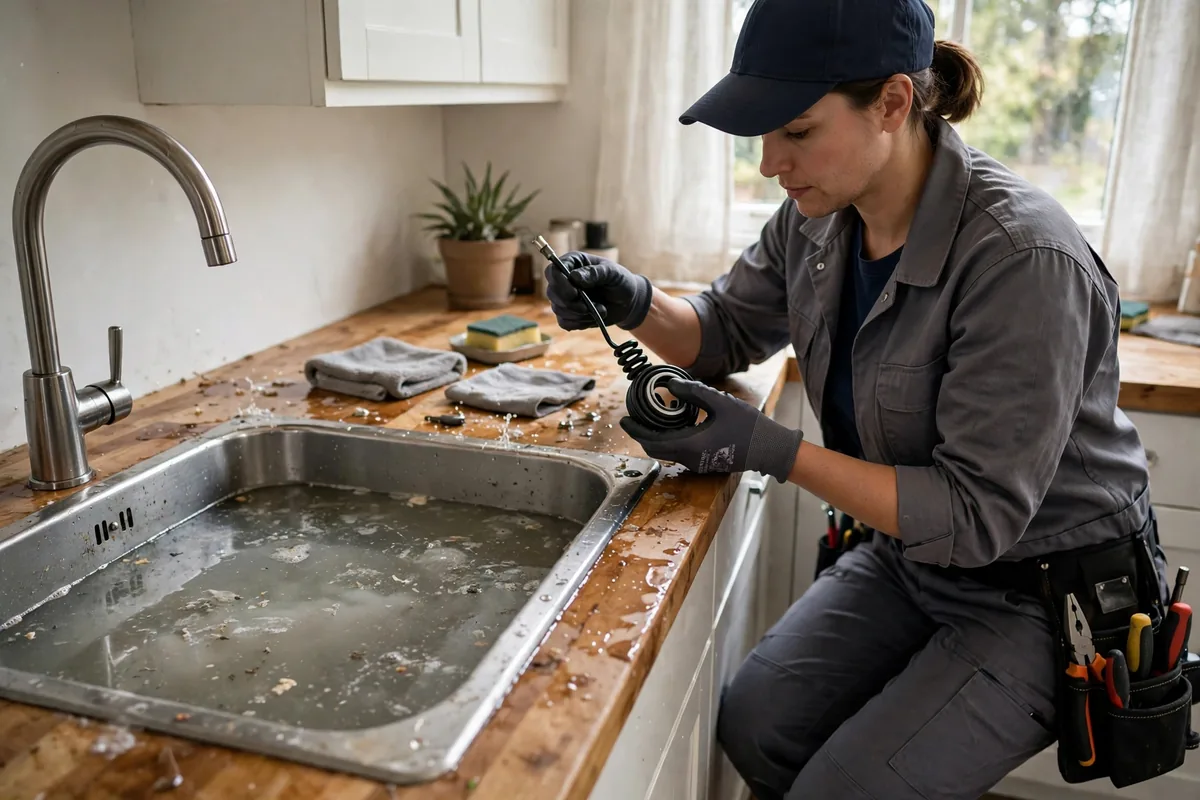
Kitchen Drain Clogged? Causes And Pro Fixes
Kitchen Drain Clogged — a homeowner guide.
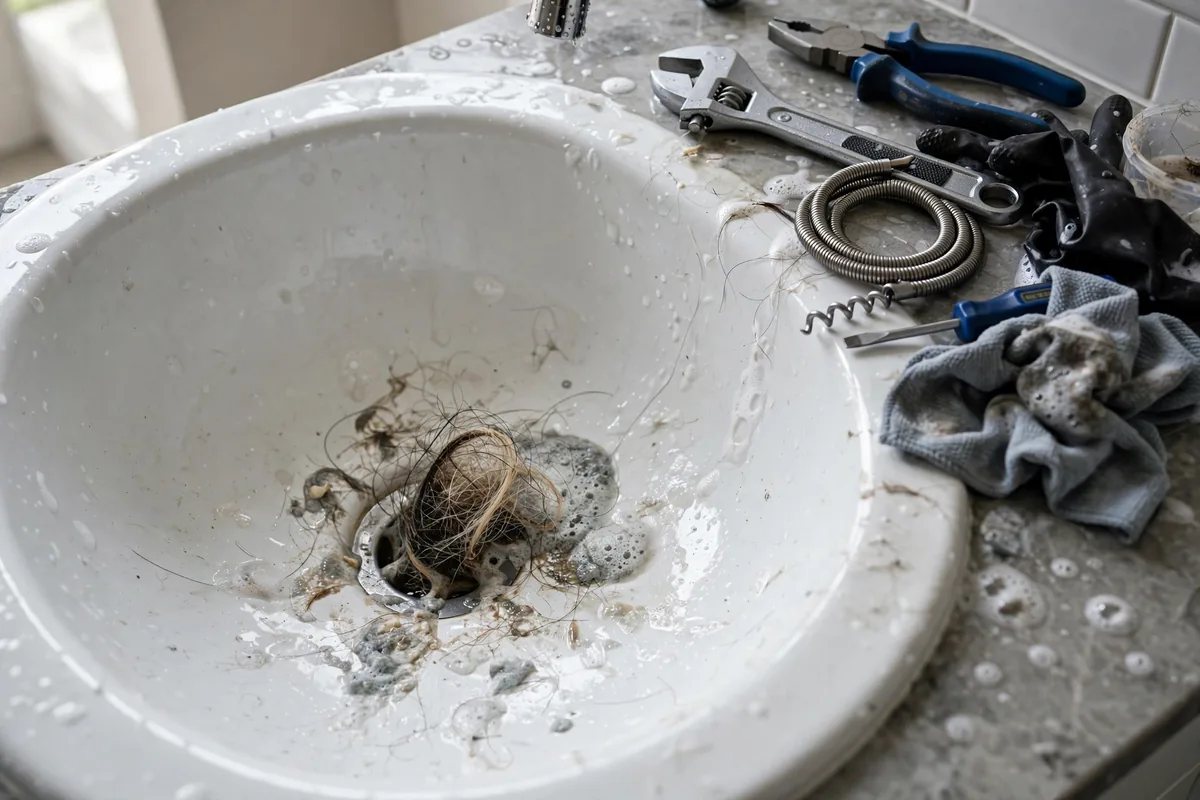
Bathroom Drain Clogs: Hair, Soap And Scale
The bathroom clog is a braid: hair as the rope, soap residue as the glue, mineral scale as the hardener. What to do about it is the rest of this guide.
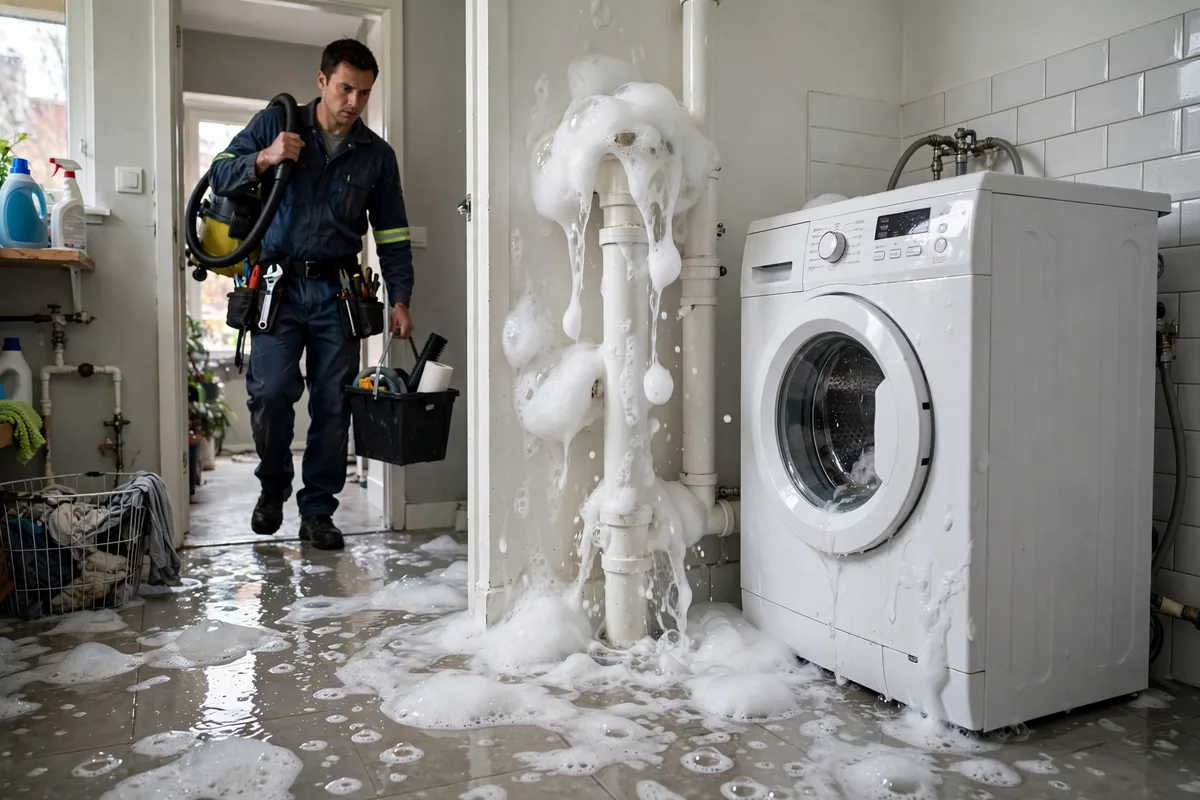
Washing Machine Drain Backing Up: Causes
The washing machine is the most violent fixture in your plumbing: it holds twenty gallons and then lets go of them in a minute. The full walk-through follows below.