
Quick Answer
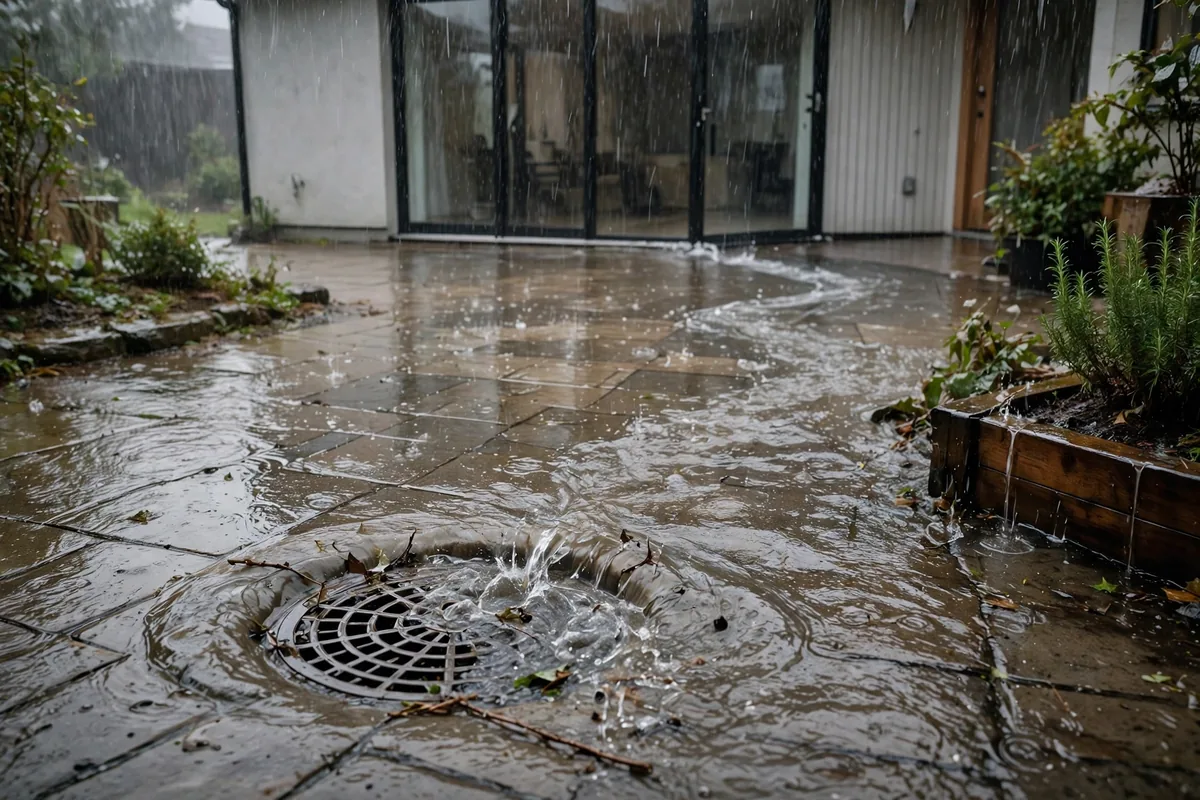
The patio drain has the hardest job description on the property: take a storm's worth of water off hard surfaces, through a line that spends the dry months collecting leaves, grit and roots, and deliver it to a street system that is, at that moment, full. What to do about it is the rest of this guide.
Patio Drain Flooding After Big Rain: Yard Drainage 101
The patio drain has the hardest job description on the property: take a storm's worth of water off hard surfaces, through a line that spends the dry months collecting leaves, grit and roots, and deliver it to a street system that is, at that moment, full.
This guide sorts patio flooding into its three causes — a blocked yard line, an overwhelmed outlet, and grading that sends water the wrong way — and explains the fixes for each, including the one nobody wants to hear about the patio itself.
The Pipes And Parts Behind It
Think of the system as a family of parts with one job. The sewer lateral is the driveway; the main sewer line is the same road named from the house. The cleanout is the gate, the P-trap the seal, the vent stack the chimney, the floor drain the basement’s alarm bell, and the grease trap the bouncer on a commercial line.
Their materials span a century of plumbing: cast iron pipe, vitrified clay pipe, PVC pipe and Orangeburg pipe, each with its ageing curve — mineral scale, pipe corrosion, a bellied pipe sagging mid-run. Beyond the property line, the flow chooses between the municipal sewer, the storm drain network in a surcharge, or the quiet independence of a septic tank.
The Tools A Pro Brings, And Why
Two machines do most of the work, and they are not interchangeable. The motorized drain snake (auger) bores and cuts — with a root cutter head it mulches tree root intrusion at the joint. Hydro jetting washes: it is the only honest answer to grease buildup (FOG) lining a wall.
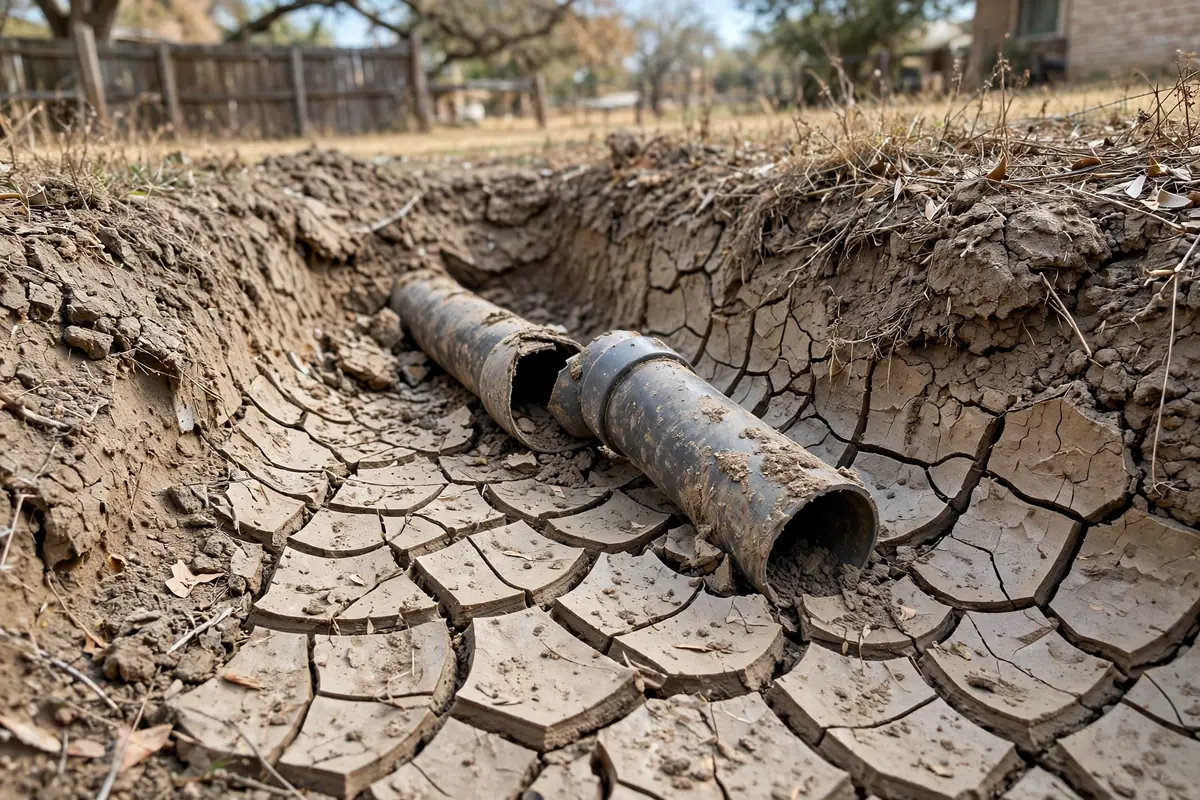
Around them: the CCTV sewer camera for evidence, chain descaling for iron that has narrowed itself, sonde line locating for finding the line under lawn or slab. The diagnosis sorts the rest — a frozen drain line needs patience, a sewer surcharge needs the street to fall, and expansive clay soil needs a repair conversation, not a cleaning one.
The Seasonal Pattern
Drains keep a calendar. Spring loads lines with rain and snowmelt and exposes every narrowed lateral; summer grows roots at full speed into the moisture inside clay joints; autumn is when smart homeowners film and clean before the holidays load the system; winter freezes the slow and the shallow.
Weather is the trigger, condition is the cause — NOAA and the National Weather Service can forecast the trigger, but only your line's record forecasts the cause. A sewer surcharge floods the street's problem into your basement only if your lateral gives it a door.
Prevention That Actually Prevents
Prevention divides into habits and knowledge. The habits: grease into the trash, never the sink; strainers on kitchen and bathroom drains; "flushable" wipes into the bin, because the sewer disagrees with the label; hot water after greasy washing-up is fine, but the pan gets wiped first.
The knowledge: where your cleanout is, what your line is made of, and what its camera record showed. A grease trap on a commercial line, a lint trap on the washer hose — small hardware, boring and decisive.
Reading The Signs Like A Pro
Pros read drains the way doctors read charts: pattern over symptom. One fixture is local; several fixtures are the main sewer line. Symptoms that follow rain implicate the storm drain and surcharge; symptoms that follow the washing machine implicate capacity; symptoms that follow guests implicate a line with no margin left.
The lowest fixture is the narrator. A floor drain that burps, a ground-floor tub that fills from below, a toilet that bubbles when the washer runs — the system always confesses at its lowest opening first.
The Tools, Honestly Compared
Pros choose tools by cause, not by habit. Roots get cutters; grease gets the jetter; a bellied pipe gets filmed and discussed, because no tool uncut a sag. Expansive clay soil moves lines in ways only excavation or lining answers — honesty about a tool's limit is part of the tool kit.
After the work, the same camera that diagnosed the line verifies it: flow at full width, joints on record, the next interval set by evidence. Any pro who will not film the result is asking to be trusted instead of checked.
When To Stop Reading And Call A Pro
When patio and yard drain flooding stops being a reading topic, it becomes a call. The pattern this guide cannot see is the one inside your line — and seeing it is a pro's whole job: cleanout open, camera in, cause on a screen you can watch. The number on this page is free, answered 24/7, and a pro can typically arrive in 30–60 minutes when it is an emergency. And if the problem arrived with a flood or a declared disaster, FEMA guidance and assistance may apply to the damage side — one more reason the paperwork starts with the pro's record.
Drain Problem Getting Worse?
One free call connects you with a local pro who can check it in person.
Call (800) 555-0100Free Call · Answered 24/7 · Local Pros Near You
Drain Cleaning Help In These Cities
When Patio Drain Flooding stops being a question and starts being an appointment, it happens on a city page: pick yours for its data, its ZIP codes and its emergency page. The state pages — Drain Cleaning Texas · Drain Cleaning Florida — cover the wider picture.
Patio Drain Flooding — Frequently Asked Questions
A real person answers 24/7 and can connect you with a local pro.
(800) 555-0100Reviewed By Hamza
Master Plumber & Emergency Drain Clearing Specialist
Hamza is a certified master plumber and emergency drainage specialist with more than 15 years of hands-on experience clearing main lines, sewer laterals and storm-drain systems. He has handled midnight sewage backups, root-choked clay laterals and grease-dam emergencies across hundreds of callouts, and he reviews every guide on this site for technical accuracy before it is published.
Updated October 31, 2026
Dealing With Patio Drain Flooding Right Now?
One free call connects you with an independent local pro — answered 24/7, with arrival in 30–60 minutes in many cases.
Call (800) 555-0100Free Call · Answered 24/7 · Local Pros Near You
Related Guides
Expansive Clay Soil And Your Sewer Line
Expansive Soil Sewer Line — a homeowner guide.

Landlord Or Tenant: Who Pays For Drain Cleaning?
The argument starts the same way everywhere: the drain is clogged, the home is a rental, and two people are pointing at the lease. The full walk-through follows below.

How Much Does Drain Cleaning Cost?
Nobody honest can price a drain cleaning from a phone call, and this guide explains why — by walking through the four things that actually set the number: which line is clogged, how far the blockage sits from the cleanout, which method the pipe can take, and what the camera finds when it gets there. The details, the tools and the honest limits follow.